
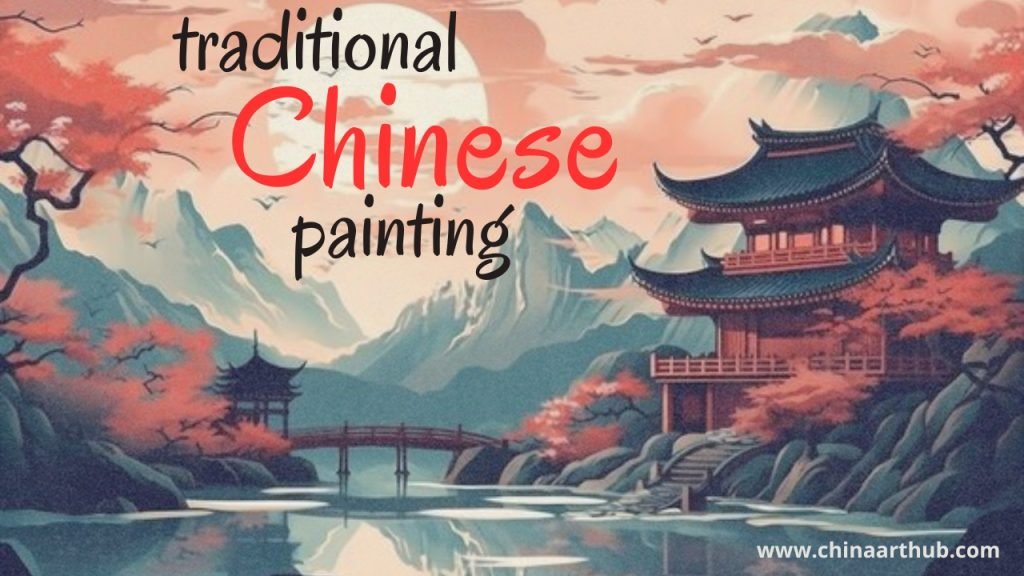
Traditional Chinese painting, known as Guóhuà (国画), is an ancient art form with a history spanning thousands of years.
Unlike Western painting, which emphasizes realism and perspective, Chinese painting focuses on expressive brushwork, symbolism, and the philosophical relationship between humans and nature.
This art form evolved through various dynasties, influenced by Daoism, Confucianism, and Buddhism, shaping its unique techniques and aesthetics.
At the core of traditional Chinese painting are four essential materials—brush, ink, paper, and inkstone—each playing a crucial role in creating the artwork’s fluid strokes and delicate textures.
Artists employ different styles such as landscape painting (Shan Shui), bird-and-flower painting (Hua Niao), and figure painting (Ren Wu), each carrying distinct cultural meanings.
The use of calligraphy, negative space (Liubai), and controlled color application further sets it apart from other artistic traditions.
This article explores the main characteristics of traditional Chinese painting, breaking down its techniques, materials, and artistic principles.
By understanding its foundations, we can appreciate how this art form continues to influence modern artists while preserving its deep historical and cultural significance.
Table of Contents
1. Materials and Techniques in Traditional Chinese Painting
Traditional Chinese painting relies on specific materials and techniques that define its unique style. The four essential materials—brush, ink, paper, and inkstone—are known as the Four Treasures of the Study (文房四宝).
These elements work together to create the fluid and expressive strokes characteristic of Chinese art.
Brushwork and Ink Usage
The Chinese brush (毛笔) is the primary tool used in painting. It has a flexible tip made from animal hair, allowing artists to create fine details, bold strokes, and smooth transitions.
Brushes come in different types, including soft, hard, and mixed-hair brushes, each serving a specific purpose in painting.
Ink is traditionally made from pine soot and animal glue, formed into solid ink sticks. Artists grind the ink stick on an inkstone (砚台) with water to achieve the desired consistency.
The ability to control ink intensity enables painters to create varying shades, from deep black to light gray washes.
Xuan Paper and Silk Canvas
Paintings are created on either Xuan paper (宣纸) or silk. Xuan paper, made from tree bark and rice straw, is highly absorbent and allows ink to spread naturally.
It is favored for calligraphy and expressive brushwork. Silk provides a smoother surface but requires careful preparation with glue and alum to hold the ink without smudging.
Painting Techniques
Traditional Chinese painting follows two main techniques:
- Gongbi (工笔) – A meticulous and highly detailed style that uses fine brushwork to depict subjects with precision.
- Xieyi (写意) – Also called “freehand” or “sketching thoughts,” this technique emphasizes expressive and spontaneous brushstrokes, capturing the essence rather than the exact form.
Artists often use different brush strokes to depict various elements of nature, such as rough textures for mountains, smooth curves for flowing water, and delicate strokes for flower petals.
2. Main Subject Matter in Traditional Chinese Painting
Traditional Chinese painting includes several main categories, each with its unique style and purpose. The three most common themes are landscape painting, bird-and-flower painting, and figure painting.
Landscape Painting (Shan Shui – 山水)
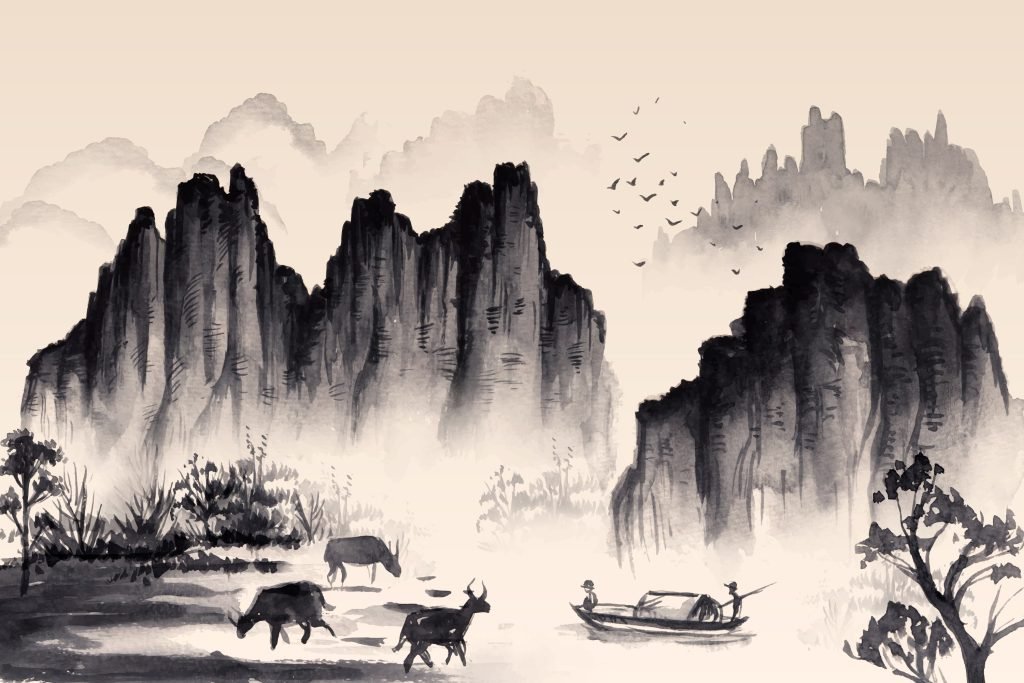
Landscape painting, known as Shan Shui (literally “mountain and water”), is one of the most celebrated styles in Chinese art. Instead of realistic representation, Shan Shui painting conveys a philosophical interpretation of nature. Key features include:
- Floating Perspective – Multiple viewpoints allow the eye to move freely across the composition.
- Symbolic Elements – Mountains represent stability, water signifies life, and mist creates a sense of mystery.
- Minimal Human Presence – Figures, if included, are small to emphasize the grandeur of nature.
Shan Shui paintings often include poetic inscriptions and seals, adding an intellectual and literary dimension to the artwork.
Bird-and-Flower Painting (Hua Niao – 花鸟)
This genre features birds, flowers, trees, insects, and other natural elements. Artists use it to express seasonal changes and symbolic meanings. Common themes include:
- Spring – Peonies and swallows (prosperity and renewal)
- Summer – Lotus flowers and dragonflies (purity and harmony)
- Autumn – Chrysanthemums and wild geese (longevity and resilience)
- Winter – Plum blossoms and sparrows (strength and endurance)
Bird-and-flower paintings can be highly detailed (Gongbi style) or expressive (Xieyi style), depending on the artist’s intent.
Figure Painting (Ren Wu – 人物)
Figure painting depicts historical figures, scholars, monks, and common people engaged in daily activities. Unlike Western portraiture, which focuses on facial details, Chinese figure painting emphasizes:
- Gesture and Posture – Expressing personality through movement.
- Clothing and Accessories – Depicting social status and cultural identity.
- Narrative Scenes – Representing stories, myths, and historical events.
Many figure paintings also incorporate calligraphy, enhancing their storytelling aspect.
3. Philosophical and Cultural Influences
Traditional Chinese painting is deeply influenced by Daoism, Confucianism, and Buddhism, shaping its artistic principles and themes.
Daoism and Nature’s Role
Daoism emphasizes the balance of Yin and Yang, harmony with nature, and the idea of spontaneity. In painting, this is reflected through:
- Asymmetry – Avoiding rigid structures to create a sense of natural flow.
- Empty Space (Liubai – 留白) – Representing the unseen or the infinite.
- Dynamic Brushwork – Capturing movement in landscapes, trees, and animals.
Daoist influence is especially strong in Shan Shui paintings, where mountains and rivers symbolize the cosmic order.
Confucianism and Moral Values
Confucianism promotes ethical principles such as filial piety, loyalty, and respect for tradition. Figure paintings often depict:
- Scholars and Poets – Representing wisdom and integrity.
- Historical Heroes – Teaching moral lessons through storytelling.
- Court and Palace Scenes – Reflecting social hierarchy and governance.
Confucian values also emphasize discipline in brush technique and composition.
Buddhism and Spiritual Expression
Buddhist themes in Chinese painting include depictions of Bodhisattvas, monks, and temples. These paintings focus on:
- Inner Tranquility – Soft lines and gentle color washes to evoke peace.
- Symbolic Imagery – Lotus flowers, clouds, and celestial beings.
- Narrative Scrolls – Illustrating Buddhist scriptures and legends.
Buddhist influence is particularly strong in Tang Dynasty (618–907 AD) murals and scroll paintings.
4. Calligraphy Integration in Chinese Painting
Calligraphy is an essential element of traditional Chinese painting. Instead of being separate from the artwork, it is integrated into the composition through poems, inscriptions, and artist seals.
Poetic Inscriptions
Many Chinese paintings include poems or philosophical statements written in calligraphy. These inscriptions:
- Provide context or emotional depth to the painting.
- Balance the composition with elegant characters.
- Show the scholar-painter’s literary skills.
Use of Different Calligraphy Styles
Artists use various calligraphy styles, such as:
- Regular Script (Kaishu – 楷书) – Clear and structured, often used for official inscriptions.
- Running Script (Xingshu – 行书) – More fluid and expressive, suitable for artistic works.
- Cursive Script (Caoshu – 草书) – Highly dynamic and abstract, creating a strong visual impact.
Artist Seals (Zhuan Shu – 篆书)
Red artist seals, often stamped in vermillion ink, serve as a signature and an indication of authenticity. These seals can belong to the artist, collectors, or art connoisseurs who have owned the painting over time.
5. Color and Composition Principles
Traditional Chinese painting follows a minimalist approach to color, using ink as the primary medium while incorporating natural pigments for subtle enhancements.
Composition relies on balance, negative space (Liubai), and fluid perspectives, creating a harmonious and expressive visual experience.
Use of Minimal Color
Traditional Chinese painting relies mostly on black ink, with color used sparingly. When applied, colors come from natural pigments like:
- Mineral-based blues and greens for landscapes.
- Plant-based reds and yellows for flowers and decorative elements.
- Gold leaf or lacquer for high-status paintings.
Negative Space (Liubai – 留白)
Leaving empty space is a fundamental principle in Chinese painting. It represents:
- Water, sky, mist, or air without explicitly painting them.
- A sense of openness and imagination for the viewer.
- Balance between solid and void elements to create harmony.
Perspective in Composition
Chinese paintings use floating perspective, meaning objects are not fixed to a single viewpoint. This allows different elements to be seen at the same time, creating a sense of depth without vanishing points.
6. Evolution and Modern Influence
Traditional Chinese painting has evolved over centuries, adapting to cultural shifts while preserving its core techniques. Modern artists blend classical brushwork with contemporary styles, incorporating new materials and digital tools.
Traditional vs. Contemporary Approaches
While many artists continue classical techniques, modern Chinese painters incorporate Western materials like oil and acrylic while retaining traditional brush techniques.
Influence on Other Asian Art
Chinese painting greatly influenced:
- Japanese Sumi-e (ink wash painting)
- Korean Minhwa (folk painting)
- Vietnamese Silk Painting
Digital and Experimental Chinese Art
Today, some artists use digital media to simulate traditional brushwork, preserving Chinese painting in new formats while maintaining its essence.
Traditional Chinese painting remains an influential and evolving art form, deeply rooted in history, philosophy, and culture. Its techniques, symbolism, and expressive brushwork continue to inspire artists worldwide.
Conclusion
Traditional Chinese painting is a timeless art form that reflects the deep cultural, philosophical, and historical roots of China. Through its unique materials, expressive brushwork, and symbolic composition, it captures the essence of nature, human life, and spiritual beliefs.
The influence of Daoism, Confucianism, and Buddhism shapes its artistic principles, while the integration of calligraphy and poetic inscriptions adds intellectual depth.
The careful use of color, perspective, and negative space further distinguishes it from Western painting traditions.
Despite its ancient origins, traditional Chinese painting continues to evolve. While classical techniques remain valued, modern artists explore new methods by incorporating digital tools, mixed media, and global influences.
This fusion of tradition and innovation ensures that Chinese painting remains relevant in contemporary art. Whether practiced in its purest form or adapted for modern expression, it remains a powerful medium for storytelling and artistic exploration.
By understanding its characteristics and evolution, we gain a deeper appreciation for this art form, recognizing its enduring influence on global aesthetics and artistic practices.