
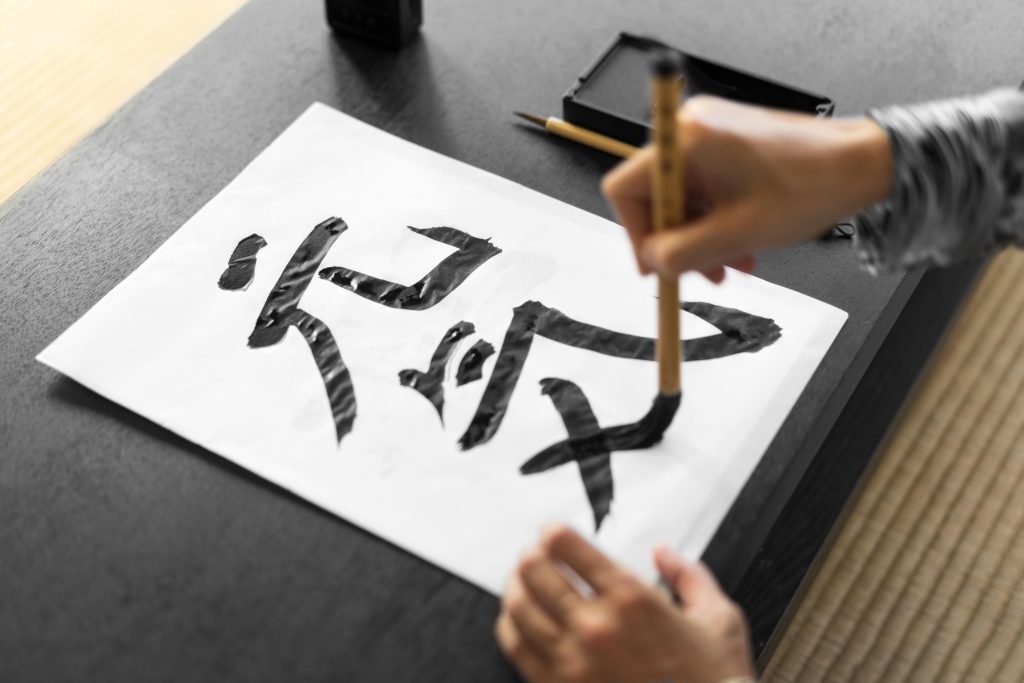
Chinese calligraphy history is one of the oldest and most respected art forms in China, with a history spanning over 3,000 years. More than just a method of writing, it has been a core part of Chinese culture, influencing painting, sculpture, and even modern design.
The art of calligraphy is not just about forming characters—it represents a deep understanding of brush control, balance, and artistic expression.
Throughout history, calligraphy and painting have been closely linked. Many famous Chinese painters were also master calligraphers, as the techniques used in writing characters directly influenced brushwork in paintings.
Literati artists of the Yuan, Ming, and Qing dynasties often combined calligraphy, poetry, and painting in a single composition, creating works that conveyed both visual beauty and intellectual depth.
This blog explores the evolution of Chinese calligraphy history, tracing its origins from early oracle bone inscriptions to its impact on traditional and contemporary Chinese painting.
By understanding this connection, we can appreciate how calligraphy has shaped Chinese artistic traditions and continues to influence modern art today.
Table of Contents
1. Origins of Chinese Calligraphy
Chinese calligraphy history has its origins in the earliest forms of Chinese writing, dating back over 3,000 years. It developed as a system for recording information and evolved into an artistic form.
Early Writing Systems
The earliest known Chinese characters were found on oracle bones and bronze inscriptions from the Shang Dynasty (c. 1600–1046 BCE).
These characters were pictographic, meaning they represented objects or concepts. This early writing was primarily used for divination and recording events.
During the Zhou Dynasty (1046–256 BCE), writing became more structured with the emergence of Bronze Script, which was inscribed onto ritual vessels. This period saw the transition from pictographic to more standardized forms of writing.
Development During the Qin and Han Dynasties
Under the Qin Dynasty (221–206 BCE), Emperor Qin Shi Huang unified China’s writing system, standardizing characters into what became known as Small Seal Script. This was a critical step in ensuring a consistent method of writing across the empire.
The Han Dynasty (206 BCE–220 CE) introduced Clerical Script, which was easier to write and became the standard for official documents. This script laid the foundation for future calligraphic styles, influencing how brush techniques were developed.
2. Evolution of Chinese Calligraphy Styles
Chinese calligraphy evolved through several distinct styles, each serving different purposes and reflecting changes in artistic expression.
Seal Script (篆书, Zhuànshū)
Seal Script was one of the earliest standardized forms of Chinese writing, used primarily for official inscriptions and seals. It is characterized by even strokes and symmetrical forms, making it less fluid but visually harmonious.
Clerical Script (隶书, Lìshū)
Clerical Script emerged during the Han Dynasty and was widely adopted for administrative use. It introduced horizontal strokes and distinct brush movements, making it more efficient for writing on paper. This style played a significant role in shaping later calligraphic forms.
Regular Script (楷书, Kǎishū)
Regular Script developed during the Wei and Jin Dynasties (220–420 CE) and became the foundation of modern Chinese writing. It features clear, structured strokes and is widely used in education and official documents.
Calligraphers such as Ouyang Xun and Yan Zhenqing refined this style, establishing its importance in Chinese art.
Running Script (行书, Xíngshū)
Running Script is a semi-cursive form of writing that allows for greater speed and fluidity. It retains the structure of Regular Script but introduces smoother transitions between strokes.
This style became popular among scholars and artists, as it balanced clarity with expressive movement.
Cursive Script (草书, Cǎoshū)
Cursive Script is the most free-flowing and expressive calligraphic style. It is characterized by rapid, sweeping brushstrokes that often connect multiple characters. This style is used for artistic expression rather than formal writing, showcasing the skill and creativity of the calligrapher.
Each of these styles contributed to the artistic and functional development of Chinese calligraphy history, influencing how it was integrated into painting and other forms of art.
3. The Influence of Calligraphy on Chinese Painting
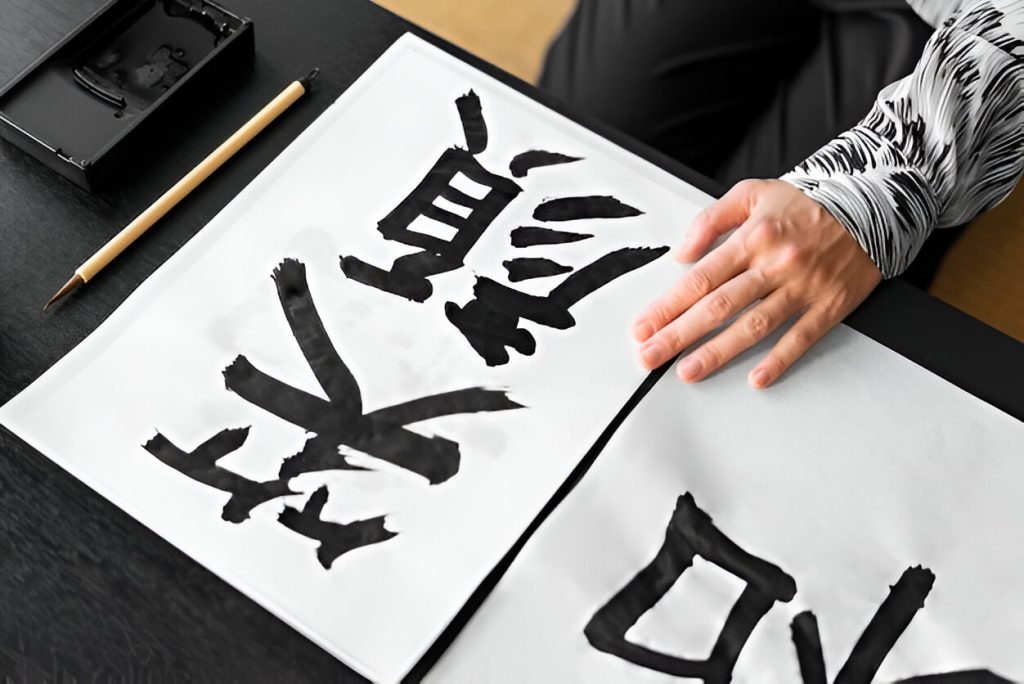
Chinese calligraphy history and painting share the same tools—brush, ink, and paper—which allowed them to develop alongside each other. Many Chinese painters were also skilled calligraphers, and the techniques used in calligraphy directly influenced painting styles.
Brush Techniques and Stroke Application
The techniques used in Chinese calligraphy history, such as brush pressure and stroke variation, played a major role in shaping traditional Chinese painting. Artists used different levels of brush pressure to create dynamic and expressive lines in their artwork.
For example:
- Thin, controlled strokes were used for fine details like tree branches.
- Bold, sweeping strokes were applied for elements like mountains and waves.
Integration of Calligraphy in Painting
Calligraphy was often included in paintings as inscriptions, either in the form of poetry or personal reflections by the artist. These inscriptions added meaning to the artwork and helped convey the artist’s emotions or thoughts.
A traditional Chinese painting typically includes:
- The main visual composition (landscape, figures, or animals).
- A calligraphic inscription, often placed in an open space to balance the composition.
- The artist’s seal, which serves as a signature.
This combination of painting, calligraphy, and seal carving created a unique form of artistic expression that blended multiple disciplines into a single work.
Influence on Literati Painting (文人画, Wénrénhuà)
During the Yuan Dynasty (1271–1368), scholar-artists, known as literati, emphasized self-expression through both painting and calligraphy. Their works often featured expressive brushstrokes that reflected personal style rather than strict realism.
Calligraphy influenced literati painting in the following ways:
- The use of expressive brushwork to create abstract elements.
- A preference for minimalism, focusing on simplicity rather than excessive detail.
- The balance between empty space and painted areas, mirroring calligraphic compositions.
These elements made Chinese painting distinct from Western painting traditions, which often focused on realism and depth.
4. Calligraphy and Symbolism in Chinese Art
Chinese calligraphy is not just a writing system; it also carries symbolic meaning and reflects philosophical concepts.
Daoist Influence
Daoism emphasizes spontaneity and natural flow, which is evident in Cursive Script and freehand brush techniques in painting. Calligraphy that appears effortless and fluid reflects Daoist principles of harmony and simplicity.
Confucian Influence
Confucianism values discipline and structure, which is reflected in Regular Script and carefully composed calligraphic works. Scholars who followed Confucian ideals practiced calligraphy as a way to cultivate patience and self-discipline.
Symbolism of Brush Strokes
Each brushstroke in calligraphy holds symbolic meaning. The strength of a stroke can represent stability, while fluid transitions between strokes symbolize movement and energy.
These elements also influence Chinese painting, where brushwork is used to express the spirit of a subject rather than its exact appearance.
Calligraphy in Religious and Spiritual Art
Calligraphy plays an important role in Buddhist and Daoist art. Many Buddhist sutras were copied in elegant calligraphy as a form of devotion. Temples often feature large inscriptions of religious texts, showcasing the artistic and spiritual significance of calligraphy.
5. Calligraphy in Contemporary Chinese Art
Even in the modern era, Chinese calligraphy history remains an essential part of artistic expression. While traditional calligraphy continues to be practiced, it has also evolved to fit contemporary artistic movements.
Modern Calligraphy and Abstract Art
Many modern artists experiment with calligraphy by blending traditional brush techniques with abstract forms. Instead of writing recognizable characters, they use calligraphic strokes to create abstract compositions.
This approach allows artists to preserve the essence of calligraphy while exploring new visual styles.
Digital Calligraphy and Graphic Design
With advancements in digital technology, calligraphy is now integrated into digital media, branding, and design. Companies use traditional calligraphic elements in logos and advertisements to evoke cultural heritage.
Digital tools allow artists to experiment with brush effects and calligraphic styles in ways that were not possible with traditional materials.
Calligraphy in Contemporary Chinese Ink Painting
Many contemporary ink painters continue to incorporate calligraphy into their work. Instead of using calligraphy purely for inscriptions, they blend it with painting elements, creating works where the lines of calligraphy merge with abstract visual forms.
Calligraphy in Public Art and Exhibitions
Large-scale calligraphy installations are now featured in public spaces and art exhibitions. These works often use modern materials, such as metal or digital screens, to present calligraphy in innovative ways.
This demonstrates that while traditional brush-and-ink calligraphy is still valued, the art form has adapted to new mediums and contemporary artistic movements.
Conclusion
Chinese calligraphy history has been a fundamental part of Chinese culture for over 3,000 years, shaping artistic expression in ways beyond just writing.
Its development from early pictographic symbols to refined calligraphic styles has influenced painting, sculpture, and modern visual design.
The close relationship between calligraphy and Chinese painting is evident in brush techniques, composition, and the integration of calligraphic inscriptions into artworks.
Throughout history, calligraphy has served not only as a method of communication but also as a medium for artistic and philosophical expression.
It reflects key principles of Daoism, Confucianism, and Buddhism, influencing both the visual and spiritual aspects of Chinese art.
The discipline, precision, and fluidity of calligraphic strokes have been integral to traditional ink paintings, literati art, and contemporary artistic innovations.
Even in modern times, calligraphy continues to evolve, adapting to new mediums such as digital art, commercial branding, and large-scale installations.
While technology has changed the way it is practiced, its essence remains intact. As both a historical tradition and a living art form, Chinese calligraphy history continues to inspire artists, preserving its relevance in a rapidly changing world.