
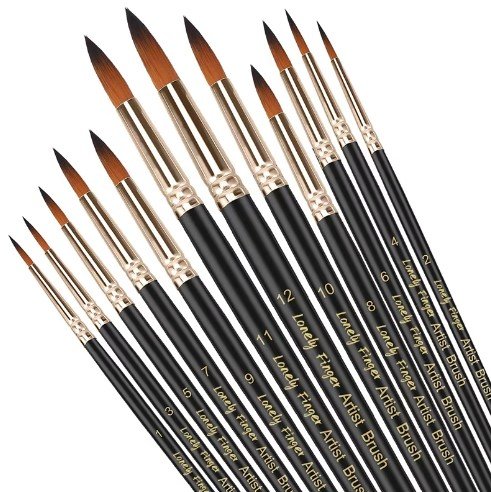
Painting brush are fundamental tools in various creative and industrial applications. Whether you are an artist working on a masterpiece, a professional painter handling large-scale projects, or a DIY enthusiast refreshing your home, the right brush can significantly impact the final outcome.
Each brush is designed with a specific purpose, and understanding their differences helps achieve better precision, efficiency, and control.
Painting brushes vary in shape, bristle type, and size, with each design catering to specific techniques. From delicate detailing with liner brushes to broad strokes with flat brushes, selecting the appropriate tool ensures smooth application and desired texture.
Industrial-grade brushes also serve essential roles in commercial painting, woodworking, and home improvement tasks, making them indispensable across multiple fields.
This guide explores different types of painting brushes, their structures, and how they enhance painting efficiency. Backed by case studies and factual data, this article aims to provide clear insights into brush selection and usage.
Whether you are blending colors, creating textures, or applying smooth coats, understanding these tools will elevate your painting experience.
Painting brushes are essential tools in various painting applications, ranging from fine art to home improvement and industrial work. Understanding the different types of brushes and their uses ensures better results, efficiency, and precision. This guide provides an in-depth look at painting brush structures, types, usage, and maintenance.
Table of Contents
1. Structure of a Painting Brush
A painting brush consists of three primary components:
Bristles (Hair)
Bristles are the most critical part of a brush, as they determine how paint is applied. They can be categorized into two types:
- Natural Bristles: Made from animal hair, such as hog, sable, or squirrel. These bristles hold more paint and are suitable for oil-based paints and fine detailing.
- Synthetic Bristles: Made from nylon or polyester. They work well with water-based paints and are more durable, maintaining their shape longer.
Ferrule
The ferrule is the metal or plastic band that secures the bristles to the handle. High-quality brushes have a tightly crimped ferrule to prevent shedding. Ferrules are typically made of:
- Aluminum or Tin: Found in budget-friendly brushes. They can bend or loosen over time.
- Nickel or Brass: Found in professional-grade brushes. They resist rust and corrosion.
Handle
Handles come in different materials and lengths, affecting comfort and control.
- Wood Handles: Offer a traditional grip and balance. They may be varnished to resist moisture.
- Plastic Handles: Lightweight and more affordable but may lack the balance of wooden handles.
- Short Handles: Ideal for close-up, detailed work, commonly used in watercolor and fine art.
- Long Handles: Used for large-scale paintings or when working at a distance, such as in oil and acrylic painting.
2. Types of Painting Brushes and Their Uses
Artist Brushes (Fine Art & Decorative Painting)
These brushes are used for precise work, blending, and creating artistic details.
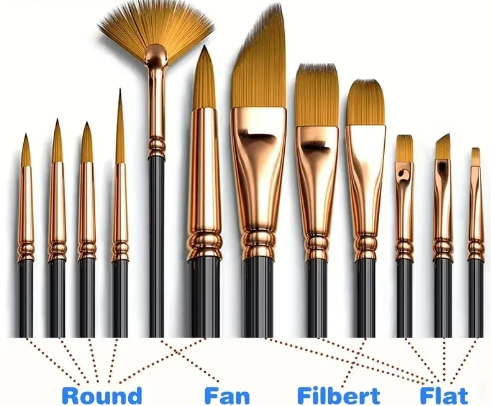
a. Round Brush
- Shape: Cylindrical with a pointed tip.
- Uses: Creating fine lines, detailed work, and controlled strokes. Works well for both thin and thick applications.
- Best For: Watercolor, acrylic, and oil painting.
b. Flat Brush
- Shape: Rectangular with a flat tip.
- Uses: Ideal for bold strokes, blending, and covering large areas efficiently.
- Best For: Backgrounds, base coats, and washes in acrylic and oil painting.
c. Bright Brush
- Shape: Similar to a flat brush but with shorter bristles.
- Uses: Allows for controlled strokes and thick paint applications.
- Best For: Impasto techniques in oil and acrylic painting.
d. Filbert Brush
- Shape: Flat with rounded edges.
- Uses: Blending colors seamlessly and creating soft, natural edges.
- Best For: Figure painting, floral artwork, and oil painting.
e. Fan Brush
- Shape: Spread-out bristles resembling a fan.
- Uses: Creates textures such as foliage, clouds, or hair.
- Best For: Dry brush techniques and blending in oil and acrylic painting.
f. Angular Brush (Angle Shader)
- Shape: Slanted bristles.
- Uses: Ideal for shading, curved strokes, and precision work.
- Best For: Decorative painting and calligraphy.
g. Liner Brush (Script or Rigger Brush)
- Shape: Long, thin bristles.
- Uses: Designed for creating fine lines, signatures, and intricate details.
- Best For: Watercolor and detailed brushwork.
h. Mop Brush
- Shape: Large, soft, and rounded.
- Uses: Used for blending and applying large washes of color.
- Best For: Watercolor, acrylic washes, and smooth blending.
Commercial and Industrial Brushes
These brushes are designed for large-scale or utility applications, including home painting and professional work.
a. Chip Brush
- Uses: Applies glue, stains, and rough painting jobs. Disposable for quick applications.
- Best For: Furniture staining and industrial use.
b. Stencil Brush
- Uses: Short, stiff bristles ensure paint is applied through stencils without bleeding.
- Best For: Decorative wall stenciling and fabric painting.
c. Sash Brush
- Uses: Designed for precise strokes in edges and corners.
- Best For: Window frames, doors, and furniture edges.
d. Wall Brush (Block Brush)
- Uses: Covers large surfaces quickly. Holds thick paint for efficient application.
- Best For: Interior and exterior wall painting.
e. Radiator Brush
- Uses: Long-handled brush designed for painting behind radiators and in tight spaces.
- Best For: Home improvement projects in hard-to-reach areas.
f. Foam Brush
- Uses: Absorbs paint and applies a smooth coat without brush marks.
- Best For: Staining, varnishing, and polyurethane coatings.
3. Choosing the Right Brush for Your Project
Selecting the correct brush ensures better results and enhances efficiency. Consider the following factors when choosing a brush.
Based on Paint Type
- Water-based paints: Use synthetic brushes (nylon or polyester) for smooth application.
- Oil-based paints: Use natural bristle brushes for better paint retention.
Based on Application
- For detailed work: Choose round, liner, or rigger brushes for precise lines and intricate designs.
- For blending: Filbert, fan, or mop brushes help create soft edges.
- For textures: Bright brushes and fan brushes add depth to paintings.
- For large coverage: Flat brushes, wall brushes, and block brushes cover large areas efficiently.
Based on Handle Length
- Short handles: Provide better control for close-up work. Ideal for watercolor and small-scale paintings.
- Long handles: Allow for broader strokes and are commonly used in large paintings and murals.
4. Brush Maintenance & Care
Proper care extends the lifespan of brushes, maintaining their shape and performance.
Cleaning Brushes
- Water-based paints: Rinse with warm water and mild soap immediately after use.
- Oil-based paints: Use mineral spirits or turpentine to remove paint residue.
- Acrylic paints: Wash quickly before the paint dries to prevent hardening.
Drying Brushes Properly
- After washing, reshape the bristles with fingers and let the brush dry flat or hanging downwards to avoid water collecting in the ferrule.
Storing Brushes
- Avoid crushing bristles: Store brushes upright or hang them to maintain their shape.
- Use protective covers: Keep fine art brushes in protective cases to prevent damage.
Avoiding Common Mistakes
- Never leave brushes soaking in water or solvents for too long, as it weakens the ferrule and bristles.
- Do not overload brushes with paint, as it can cause bristles to splay.
- Clean immediately after use to prevent dried paint buildup.
Conclusion
Choosing the right painting brush is essential for achieving precision, efficiency, and the desired finish in any painting project. Whether for fine art, home improvement, or industrial applications, understanding the different types of brushes and their uses ensures better results.
Round brushes excel in detailed work, flat brushes cover large areas efficiently, and specialty brushes like fan and filbert brushes help with texture and blending.
Commercial and industrial brushes, such as chip brushes, wall brushes, and foam brushes, are designed for large-scale projects and utility applications.
Beyond selection, proper brush maintenance plays a crucial role in their longevity. Cleaning brushes immediately after use, drying them properly, and storing them correctly prevent bristle damage and maintain their effectiveness over time.
Using the right brush for the right task not only improves the quality of work but also enhances productivity, making painting a more enjoyable and efficient process.
Whether you are an artist, contractor, or DIY enthusiast, investing in high-quality brushes and taking care of them will always lead to better results and a more satisfying painting experience.