

Traditional Chinese art is one of the world’s oldest and most influential artistic traditions, spanning thousands of years. Rooted in philosophy, spirituality, and cultural heritage, it has shaped visual expression across different dynasties.
Unlike Western art, which often emphasizes realism and perspective, Chinese art focuses on symbolism, harmony, and the relationship between humans and nature.
From ink wash paintings and calligraphy to porcelain and jade carvings, it encompasses a diverse range of techniques and materials.
Brush and ink remain central to many art forms, particularly in landscape painting and calligraphy, where each stroke conveys meaning and emotion.
Nature plays a dominant role, with mountains, rivers, and animals often symbolizing deeper philosophical ideas. Additionally, elements like red seals, poetic inscriptions, and balanced compositions distinguish Chinese artistic works from other traditions.
Table of Contents
Traditional Chinese Art Main Characteristics Explained
This article explores the key characteristics of these Chinese art, breaking down its themes, techniques, and historical significance.
Whether in the delicate strokes of a calligraphy piece or the intricate patterns of Ming Dynasty porcelain, Chinese art reflects a long-standing tradition of craftsmanship and cultural identity.
1. Strong Influence of Philosophy and Spiritual Beliefs
Traditional Chinese art is deeply shaped by philosophical and spiritual beliefs. The three main influences—Confucianism, Taoism, and Buddhism—each contribute to artistic themes, styles, and meanings.
- Confucianism emphasizes ethics, respect for tradition, and social harmony. Art often portrays scholars, historical figures, and scenes that reflect moral values. Calligraphy and literature-based paintings were highly regarded in Confucian traditions.
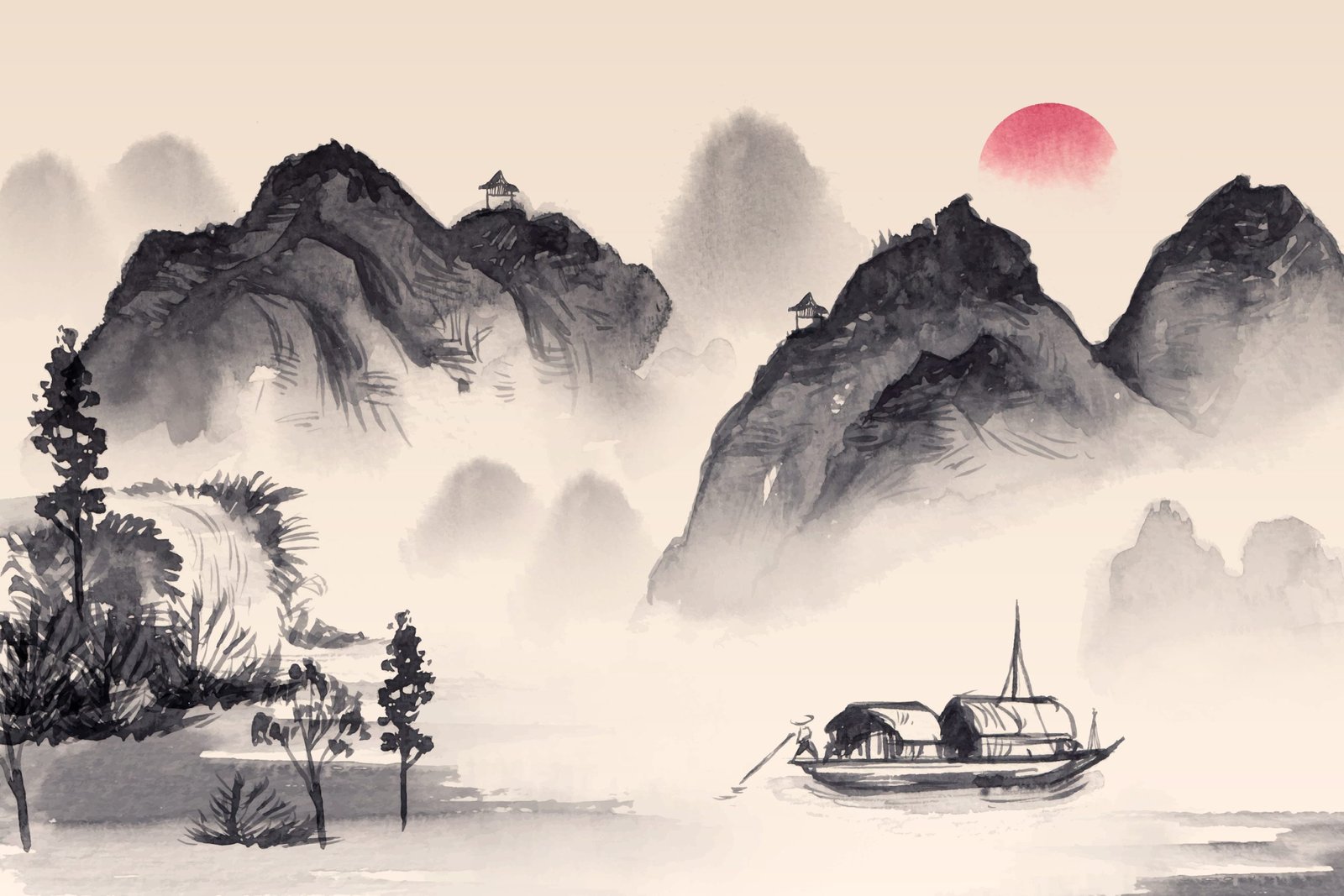
- Taoism focuses on nature, balance, and the flow of energy (Qi). This influence is seen in landscape paintings that depict mountains, rivers, and mist, symbolizing the natural order and human connection to the universe.
- Buddhism introduces religious iconography, including sculptures, murals, and paintings of deities. Monks and spiritual teachings are frequent subjects, and Buddhist influence extends to decorative arts, such as temple carvings and prayer scrolls.
Chinese art does not merely depict reality but aims to convey deeper philosophical insights, often using nature and human figures as metaphors for wisdom, virtue, and cosmic balance.
2. Use of Brush and Ink Techniques
Brush and ink are the foundation of traditional Chinese painting and calligraphy. Unlike Western oil painting, which relies on layering and color blending, Chinese brushwork emphasizes controlled strokes, fluidity, and minimalism.
- Ink wash painting (Shui-mo Hua) relies on black ink diluted with water to create different shades. Artists use varying brush pressure and speed to achieve effects like soft washes or sharp edges.
- Calligraphy is an art form in itself, with distinct styles such as Regular Script (Kaishu), Running Script (Xingshu), and Grass Script (Caoshu). Each stroke follows a disciplined technique, reflecting the artist’s skill and emotion.
- Brush handling requires precision. A single brush can create fine lines or broad strokes, depending on the grip and movement. The technique is taught through repetition and adherence to traditional forms.
- Paper and silk are the main surfaces used. High-quality rice paper absorbs ink well, while silk provides a smoother surface for detailed work.
Mastery of brush and ink techniques takes years of practice. Artists strive for spontaneity, where each stroke carries meaning and intention without excessive reworking.
3. Emphasis on Nature and Landscape Painting
Nature is central to traditional Chinese art. Mountains, rivers, trees, and clouds are common subjects, reflecting the deep appreciation for natural harmony.
- Shan Shui (mountain-water) painting represents landscapes not as realistic depictions but as idealized visions of nature. Artists arrange elements based on balance and symbolism rather than perspective.
- The human figure is secondary in landscapes. If present, it is often small, emphasizing nature’s vastness and humanity’s humble place within it.
- Empty space (Liubai) is intentionally left blank to create openness and invite imagination. It represents air, mist, or spiritual depth rather than physical emptiness.
- Symbolic use of elements:
- Mountains symbolize strength and endurance.
- Water represents adaptability and movement.
- Trees and rocks stand for stability and longevity.
Landscape painting is not just a representation of scenery but an expression of the artist’s inner thoughts and emotions, often carrying poetic meaning.
4. Symbolism and Hidden Meanings
Traditional Chinese art is rich in symbolism. Every element, whether a flower, animal, or color, carries a specific meaning.
- Animals:
- The dragon symbolizes power, authority, and imperial rule.
- The phoenix represents renewal and harmony.
- The crane stands for longevity and wisdom.
- Plants and Flowers:
- The lotus symbolizes purity and enlightenment.
- The peony represents wealth and prosperity.
- The bamboo stands for resilience and integrity, bending but not breaking.
- Numbers and Colors:
- The number nine is associated with the emperor and eternity.
- Red symbolizes luck and joy, while black can represent depth and mystery.
Artists carefully select symbols to enhance the meaning of their work, making each painting or decorative piece more than just a visual display—it tells a deeper story.
5. Delicate and Balanced Composition
Traditional Chinese art follows principles of balance and harmony. Unlike Western paintings, which use fixed perspective and symmetry, Chinese compositions prioritize rhythm and flow.
- Asymmetry is intentional, creating a sense of movement rather than rigid structure.
- Vertical and horizontal scrolls guide the viewer’s eye along a natural progression, encouraging slow appreciation.
- Layering and spacing are used to create depth. Near objects are detailed, while distant elements are faded, often using mist to imply vast space.
- Negative space (Liubai) plays a key role, allowing elements to “breathe” and adding a sense of openness.
This careful balance makes Chinese paintings feel dynamic and natural rather than artificially constructed.
6. Dominance of Traditional Subjects
Chinese art consistently features themes that reflect cultural values and traditions. The most common subjects include:
- Figures: Scholars, poets, emperors, and mythical beings are frequently portrayed. They represent wisdom, leadership, or historical significance.
- Birds and Flowers: These are used to express emotions, seasons, and auspicious meanings.
- Historical and Literary Scenes: Many artworks depict famous stories from Chinese history, literature, and folklore. Scenes from classic texts like Romance of the Three Kingdoms or Journey to the West are common.
- Religious and Mythological Subjects: Deities, immortals, and celestial beings are often illustrated in murals, sculptures, and paintings.
Artists choose subjects carefully to align with cultural expectations and storytelling traditions, ensuring that art remains meaningful and connected to Chinese heritage.
7. Distinctive Ceramics and Porcelain Art
Chinese ceramics are among the most famous and influential art forms. They developed unique techniques and styles that spread worldwide.
- Glazing techniques evolved across dynasties, from early celadon ware to the advanced blue-and-white porcelain of the Ming Dynasty.
- Kiln innovations allowed for different firing temperatures, leading to variations in texture and durability.
- Patterns and motifs often featured nature, dragons, phoenixes, and geometric designs, reflecting cultural beliefs and aesthetic preferences.
- Porcelain production centers such as Jingdezhen became global hubs for high-quality ceramics, influencing trade and artistic exchange.
Chinese porcelain remains a major part of traditional art, blending craftsmanship with cultural symbolism.
8. Integration of Poetry and Art
Poetry and painting are closely linked in Chinese art. Many artworks include poetic inscriptions that complement the visual elements.
- Calligraphy and painting are often created together, as both require mastery of brush control and artistic expression.
- Poetic verses add depth, explaining the artist’s inspiration or the intended mood of the artwork.
- Harmony between text and image is essential. Artists carefully position inscriptions to enhance, rather than overpower, the composition.
This integration of poetry ensures that Chinese art is not just visual—it also carries literary and intellectual depth.
9. The Role of Red Seals and Artist Stamps
Red seals (chops) are an essential part of Chinese artworks, serving as signatures and authentication marks.
- Artists use personal seals to validate their work, often alongside handwritten inscriptions.
- Collectors and emperors also add seals, marking important ownership history.
- Seals are carved in stone and stamped with red cinnabar ink, creating a contrast with the painting’s black ink and muted colors.
These stamps give artworks historical continuity, showing how pieces were appreciated and passed down through generations.
10. Craftsmanship in Traditional Chinese Decorative Arts
Beyond paintings and ceramics, Chinese decorative arts include silk embroidery, jade carving, lacquerware, and woodwork.
- Silk embroidery features highly detailed patterns, often depicting flowers, birds, and historical figures.
- Jade carving is valued for its smooth texture and symbolic meanings.
- Lacquerware is used for furniture, screens, and decorative objects, with intricate designs and rich colors.
- Wood and bamboo carvings showcase fine craftsmanship, often depicting religious or mythological scenes.
Each craft reflects China’s dedication to artistry, ensuring that even everyday objects are made with precision and cultural significance.
Conclusion
Traditional Chinese art is a reflection of the country’s deep-rooted cultural, philosophical, and spiritual beliefs. Unlike Western art, which often emphasizes realism and perspective, Chinese art focuses on symbolism, harmony, and the connection between humans and nature.
Its foundations lie in brush and ink techniques, where every stroke carries meaning and intention. Landscape paintings dominate artistic expression, using mountains, rivers, and empty spaces to convey deeper philosophical ideas.
Symbolism plays a crucial role, with animals, flowers, and colors holding specific meanings that enhance the narrative of each artwork.
The integration of poetry and inscriptions further elevates Chinese art, blending literature with visual expression. Red seals and artist stamps authenticate and add historical significance to each piece, creating a legacy that spans centuries.
Beyond paintings, traditional Chinese art extends to ceramics, porcelain, jade carving, silk embroidery, and decorative crafts, all of which demonstrate precision and dedication to craftsmanship.
Whether in a scroll painting or an intricately designed porcelain vase, Chinese art remains timeless, preserving cultural identity while continuing to influence artistic traditions worldwide.
Its principles of balance, symbolism, and philosophy ensure that it remains relevant, admired, and studied across generations.