
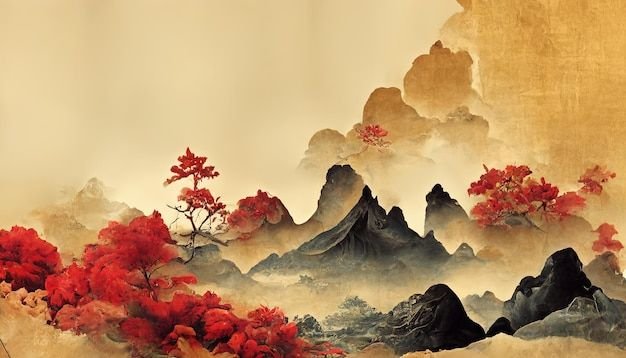
Traditional Chinese drawings are not just visual art—they are a powerful reflection of China’s rich history, philosophy, and cultural identity. For centuries, these drawings have captured the essence of nature, human life, and spiritual beliefs, blending technique, symbolism, and emotion into every stroke. From the delicate, precise lines of Gongbi painting to the bold, expressive brushwork of Xieyi, traditional Chinese drawings reveal a unique artistic language that continues to inspire artists and collectors worldwide.
Rooted in dynasties such as Tang, Song, and Ming, these artworks evolved alongside Chinese philosophy, incorporating elements of Confucianism, Taoism, and Buddhism. Landscapes, flowers, birds, and human figures are not just subjects—they are cultural symbols conveying wisdom, morality, and harmony with nature. Today, traditional Chinese drawings are celebrated globally, admired for their elegance, historical depth, and intricate detail.
In this comprehensive guide, we uncover the various styles, techniques, and historical milestones of traditional Chinese drawings. Whether you are an art enthusiast, a collector, or someone eager to explore the secrets of ancient Chinese culture, this article will give you an in-depth understanding of one of the world’s most revered art forms.
Table of Contents
The Fascinating History of Traditional Chinese Drawings
The history of traditional Chinese drawings spans thousands of years, dating back to the Shang Dynasty (1600–1046 BCE), where early forms of pictorial representation were etched on oracle bones. These early drawings were primarily symbolic, serving ritualistic and spiritual purposes. Over time, Chinese drawing evolved into a sophisticated art form deeply influenced by Confucianism, Taoism, and Buddhism, each leaving its distinct mark on artistic expression.
During the Tang Dynasty (618–907 CE), Chinese drawing reached a new height of refinement, with artists mastering the fine lines and brush techniques that define traditional art today. By the Song Dynasty (960–1279 CE), Chinese ink paintings had become a cultural cornerstone, merging painting with poetry and calligraphy to convey philosophical depth. This historical evolution demonstrates the profound role of traditional Chinese drawings in shaping Chinese culture and aesthetics.
Key Styles of Traditional Chinese Drawings
Understanding the main styles is essential for appreciating Chinese drawing at its core. Here are the most prominent styles:
1. Ink Wash Painting (Shui Mo Hua)
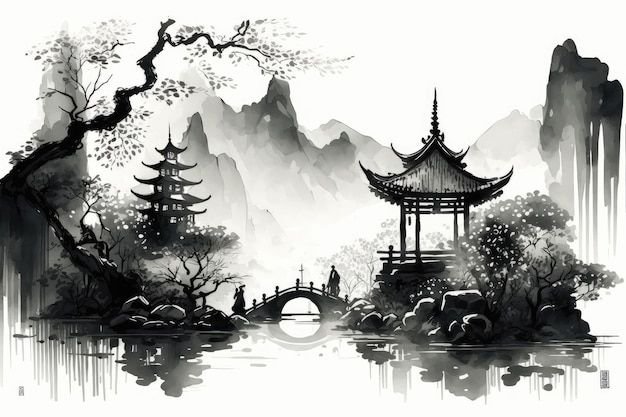
Ink wash painting, also known as literati painting, is perhaps the most iconic form of Chinese drawing. Artists use varying concentrations of black ink on paper or silk to create soft, flowing landscapes or expressive figures. The beauty of ink wash painting lies in its balance between simplicity and sophistication, where every brushstroke carries emotion and meaning.
Semantic keywords: Chinese landscape art, literati painting, ink brush techniques, traditional Chinese scenery.
2. Gongbi (Meticulous Brushwork)
Gongbi style is the meticulous, detailed approach to drawing. Artists create realistic representations of flowers, birds, and human figures with precise lines and vibrant colors. Unlike ink wash painting, Gongbi emphasizes clarity and accuracy, making it a favorite for court paintings and decorative works.
Semantic keywords: fine line painting, detailed Chinese art, traditional flower drawings, classic Chinese portraits.
3. Xieyi (Freehand Style)
Xieyi, or the freehand style, focuses on expressive brushwork and emotional impact rather than realistic representation. Often called the “sketching heart” style, Xieyi captures the essence of a subject with bold strokes and a minimalist approach, conveying energy and spontaneity.
Semantic keywords: expressive Chinese painting, freehand brush art, spontaneous drawing, traditional Chinese aesthetics.
4. Figure Drawing in Traditional Chinese Art
Figure drawing emphasizes human forms and narratives, often illustrating historical events, legends, or everyday life. Ancient figure drawings reveal insights into clothing, social hierarchy, and cultural norms. Notable artists like Gu Kaizhi pioneered the delicate depiction of human anatomy and expression, setting a standard for centuries.
Semantic keywords: Chinese figure painting, historical Chinese art, Gu Kaizhi art, ancient Chinese sketches.
READ ALSO: The Art of Chinese Drawings: A Deep Dive into Tradition and Modernity
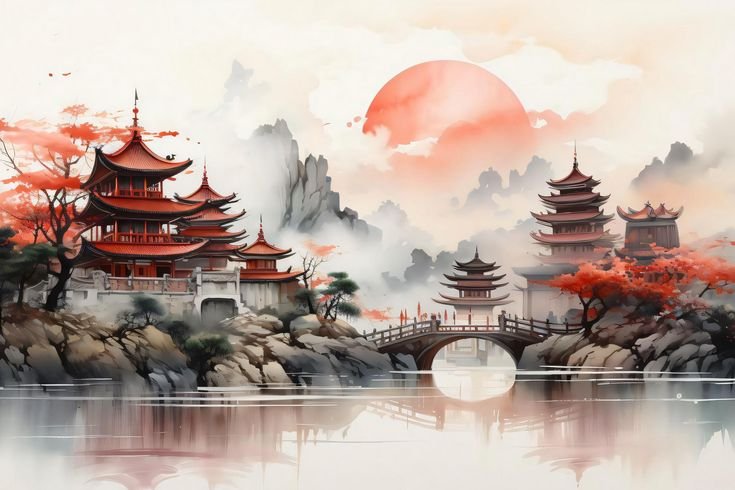
Essential Techniques in Traditional Chinese Drawings
Mastering traditional Chinese drawing requires understanding the core techniques used for centuries:
- Brush Techniques: Different strokes create textures, forms, and shading. Techniques like cun fa (texture strokes) give landscapes depth.
- Ink and Color Application: Artists mix ink density and color to create contrast and atmosphere.
- Composition and Balance: Symmetry, negative space, and perspective are carefully planned to evoke harmony.
- Symbolism and Motifs: Each element—lotus, crane, dragon—carries cultural and spiritual meanings.
These techniques are proven methods that distinguish Chinese drawings from other global art traditions.
Symbolism in Traditional Chinese Drawings
Traditional Chinese drawings are rich with symbolism, reflecting cultural beliefs:
- Dragons symbolize power and strength.
- Lotus flowers represent purity and enlightenment.
- Bamboo signifies resilience and integrity.
- Mountains and rivers convey harmony with nature.
Understanding symbolism enhances appreciation and allows viewers to connect with the philosophical essence behind the art.
Why Traditional Chinese Drawings Remain Relevant Today
Despite modern art trends, traditional Chinese drawings remain highly influential. They inspire contemporary artists, designers, and collectors worldwide. With the global interest in Asian art, learning about traditional Chinese drawing styles can unlock investment opportunities, enhance interior decoration, or improve personal art skills.
Proven Tips for Collecting Traditional Chinese Drawings
For collectors or enthusiasts, these expert tips help secure authentic and valuable pieces:
- Research Proven Artists and Periods: Focus on renowned periods like Tang, Song, or Ming Dynasties.
- Check Materials and Techniques: Authentic drawings use rice paper, silk, and traditional ink.
- Evaluate Brushwork: Genuine artworks exhibit confident, fluid strokes.
- Verify Provenance: Documentation enhances authenticity and resale value.
- Consult Experts: Professional appraisal is crucial for high-value pieces.
Frequently Asked Questions (FAQs)
1. What is the difference between Gongbi and Xieyi painting?
Gongbi focuses on precision and realistic detail, often in color, while Xieyi emphasizes expression, emotion, and simplicity, capturing the essence rather than exact likeness.
2. Which materials are used in traditional Chinese drawings?
Artists traditionally use rice paper, silk, black ink, mineral pigments, and fine brushes to create diverse textures and effects.
3. Are traditional Chinese drawings valuable today?
Yes, many pieces from historical dynasties are highly collectible, and their value continues to grow due to cultural significance and scarcity.
4. Can beginners learn traditional Chinese drawing styles?
Absolutely. Start with basic brush techniques, ink wash practice, and studying classic works to build foundational skills.
5. How do symbols in Chinese drawings enhance meaning?
Symbols like bamboo, lotus, and dragons convey philosophical or spiritual messages, allowing viewers to interpret deeper cultural and moral values.
Conclusion
Traditional Chinese drawings are much more than aesthetic creations—they are a living testament to China’s cultural heritage, philosophy, and artistic mastery. From the meticulous precision of Gongbi paintings to the expressive freedom of Xieyi brushwork, each style tells a story that has been refined over centuries. These artworks are deeply intertwined with historical dynasties, philosophical traditions, and symbolic meaning, making them both visually stunning and intellectually enriching.
Studying traditional Chinese drawings allows us to unlock the cultural values, spiritual beliefs, and artistic techniques that have shaped Chinese civilization. Whether capturing landscapes, human figures, or symbolic motifs, every brushstroke reflects a careful balance of skill, emotion, and intention. Today, these drawings continue to inspire modern artists, collectors, and enthusiasts around the world, proving that ancient art forms remain relevant and influential in contemporary creativity.
By exploring the styles, techniques, symbolism, and history presented in this guide, you can gain a deeper appreciation for this extraordinary art form. Embrace the elegance, wisdom, and timeless beauty of traditional Chinese drawings, and discover why these masterpieces continue to captivate audiences and enrich global culture.