
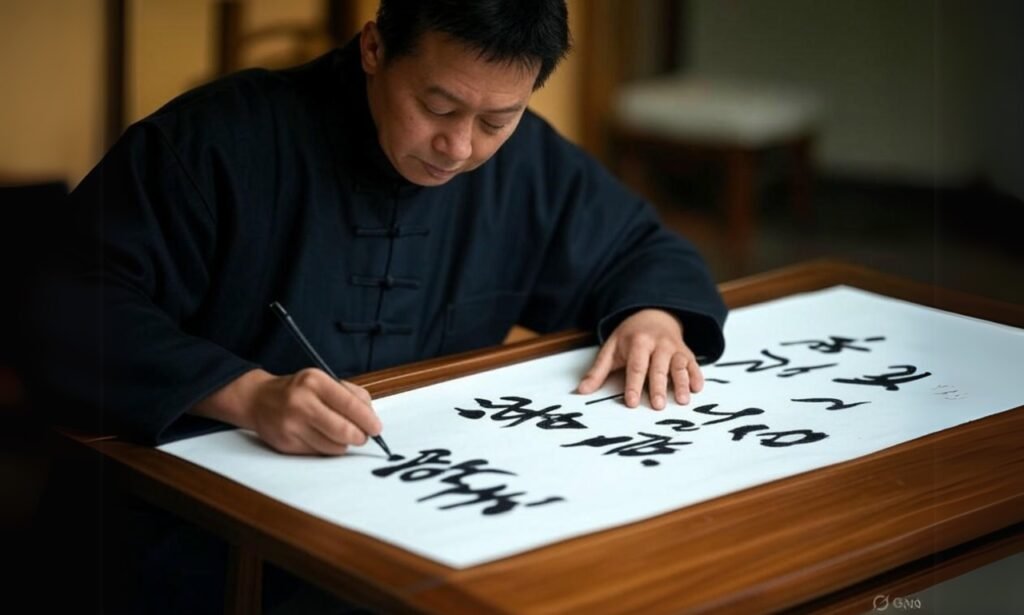
Chinese calligraphy writing is one of the oldest and most respected art forms in the world, combining writing, aesthetics, and cultural philosophy. Unlike ordinary handwriting, calligraphy emphasizes balance, rhythm, and brush technique, making each character a visual expression of meaning and style. For beginners, the practice of calligraphy can feel challenging because of the variety of writing styles, the discipline required, and the precise control of brush strokes.
The history of Chinese calligraphy stretches back thousands of years, with each dynasty contributing to the development of unique writing styles. Learning calligraphy is not just about reproducing characters; it is about understanding structure, stroke order, and the flow of brushwork. For beginners, starting with foundational scripts and gradually progressing to semi-cursive and cursive forms allows the development of both skill and confidence.
This guide explains the main Chinese calligraphy writing, the tools required, and practical techniques for beginners. By following these instructions, learners can systematically build their abilities and appreciate the art form as a disciplined yet expressive practice.
Table of Contents
1. Seal Script (篆書, Zhuànshū)
Seal Script is the oldest traditional Chinese calligraphy style, dating back to the Qin dynasty (221–206 BCE). It was primarily used for engraving seals, formal inscriptions, and ceremonial texts.
Characteristics:
- Uniform width strokes with rounded ends.
- Symmetrical and upright characters.
- Complex and structured, with straight and curved lines balanced.
Beginner’s Guide:
- Use slow, deliberate movements to maintain uniformity.
- Focus on symmetry; draw each character in a grid to keep proportions.
- Start with simple characters such as 人 (person) or 山 (mountain) to practice the main strokes.
- Avoid rushing; the style requires patience and control.
Practical Tip: Seal Script helps beginners develop precision and an understanding of how traditional characters are structured.
2. Clerical Script (隸書, Lìshū)
Clerical Script emerged during the Han dynasty (206 BCE–220 CE) and was commonly used for official documents. It is more readable than Seal Script and introduces wider horizontal strokes.
Characteristics:
- Horizontal strokes are elongated.
- Flat and slightly stretched characters.
- “Silkworm head and wild goose tail” strokes: thick start, tapering end.
Beginner’s Guide:
- Practice each horizontal stroke slowly, focusing on thickness and tapering.
- Use grid paper to maintain consistent spacing and character height.
- Begin with characters like 永 (eternity) or 中 (middle) to learn the stroke dynamics.
- Combine vertical and horizontal strokes carefully to ensure stability.
Practical Tip: Clerical Script is excellent for beginners to practice stroke balance and proportion before moving to modern styles.
3. Regular Script (楷書, Kǎishū)
Regular Script is the standard form of Chinese writing, widely used for printed and handwritten texts. It is the foundation for learning other styles.
Characteristics:
- Square and upright characters.
- Clear and precise strokes.
- Balanced structure; each stroke follows specific order.
Beginner’s Guide:
- Learn the basic eight strokes: horizontal, vertical, left-falling, right-falling, dot, hook, rising, and turning.
- Practice characters like 永 (yǒng), which contains all basic strokes.
- Write slowly, focusing on stroke order and proportion.
- Check spacing between strokes and characters to maintain consistency.
Practical Tip: Regular Script is essential for building muscle memory and understanding the logic of Chinese character formation.
4. Running Script (行書, Xíngshū)
Running Script is a semi-cursive style developed for everyday writing. It combines clarity with fluidity and allows faster writing.
Characteristics:
- Slightly cursive; strokes connect smoothly.
- Characters are readable but more flowing than Regular Script.
- Balanced between speed and precision.
Beginner’s Guide:
- Start by practicing Regular Script characters and then gradually join strokes.
- Focus on smooth transitions between strokes.
- Avoid fully cursive shapes initially; keep the structure readable.
- Use medium-sized brushes to control stroke connections.
Practical Tip: Running Script helps learners develop rhythm and smooth brush movement.
5. Cursive Script (草書, Cǎoshū)
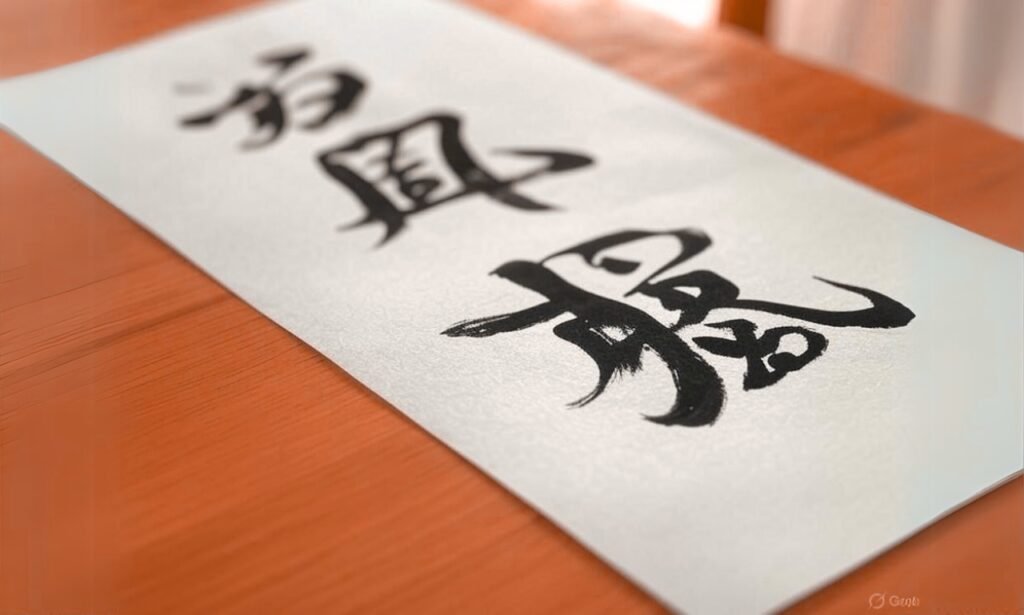
Cursive Script is the most fluid and expressive style of Chinese calligraphy writing. It emphasizes speed, flow, and artistic expression.
Characteristics:
- Highly simplified and abstract characters.
- Strokes often merge into one continuous motion.
- Difficult to read for beginners.
Beginner’s Guide:
- Only attempt after mastering Regular and Running Scripts.
- Focus on flow and brush movement rather than precise form initially.
- Practice writing small sections of characters at a time.
- Observe classical cursive works to understand stroke patterns.
Practical Tip: Cursive Script improves flexibility and creativity with brush control but should be approached gradually.
6. Tools and Materials for Beginners
Proper tools are essential for practicing Chinese calligraphy writing effectively.
Brushes:
- Made from animal hair (goat, wolf, or mixed).
- Small brushes are ideal for beginners for control; larger brushes for expressive strokes.
Ink:
- Traditional ink is made from grinding ink sticks with water.
- Bottled liquid ink can be used for convenience.
Paper:
- Rice paper is thin and absorbent, ideal for brush strokes.
- Grid paper can help maintain alignment and proportion.
Ink Stone:
- Used to grind ink sticks and mix with water.
Practical Tip: Beginners should start with one brush and ink type to get familiar with stroke control.
7. Understanding Stroke Order
Correct stroke order ensures characters are balanced, legible, and aesthetically pleasing.
Basic Rules:
- Top to bottom.
- Left to right.
- Horizontal before vertical.
- Center before sides in symmetrical characters.
- Enclosure before contents (outside before inside).
Beginner’s Guide:
- Use grid paper to track correct stroke order.
- Practice the character 永 (yǒng) to master all eight basic strokes.
- Repeat each stroke until it becomes second nature.
Practical Tip: Mastering stroke order early prevents bad habits and builds a strong foundation for all writing styles.
8. Learning Progress of a Beginner
Step 1: Basic strokes
- Focus on horizontal, vertical, diagonal, hook, dot, and turning strokes.
- Use simple characters repeatedly to reinforce stroke control.
Step 2: Simple characters
- Practice small characters with 2–5 strokes to develop proportion.
- Maintain spacing consistency between strokes.
Step 3: Regular Script mastery
- Write more complex characters systematically.
- Check balance, stroke thickness, and symmetry.
Step 4: Running Script practice
- Gradually join strokes.
- Work on fluidity without losing readability.
Step 5: Cursive Script introduction
- Begin with short phrases, maintaining flow.
- Focus on rhythm and continuous brush movement.
Practical Tip: Progress from simple to complex styles to avoid frustration and build confidence.
9. Common Mistakes Beginners Make
- Rushing strokes: Leads to uneven thickness and imbalance.
- Ignoring stroke order: Causes unstable and incorrect character structure.
- Excessive pressure: Creates inconsistent lines.
- Skipping basic practice: Makes advanced styles harder to learn.
- Overcomplicating characters: Beginners should start with simple forms.
Practical Tip: Slow down, focus on accuracy, and repeat exercises consistently.
10. Tips for Effective Practice
- Daily practice: Short, consistent sessions improve skill faster than occasional long sessions.
- Grid paper usage: Helps maintain proportion and alignment.
- Observe expert works: Analyze classical calligraphy pieces for stroke style and spacing.
- Start small: Begin with small characters and simple strokes.
- Record progress: Take photos to track improvement over time.
- Focus on fundamentals: Always practice basic strokes before attempting cursive or expressive styles.
Practical Tip: Patience and repetition are key. Progress in Chinese calligraphy writing comes gradually through daily disciplined practice.
Conclusion
Chinese calligraphy writing is more than a method of writing; it is a disciplined art form that reflects centuries of culture, philosophy, and aesthetic principles. For beginners, understanding the various writing styles—from the ancient Seal Script and structured Clerical Script to the precise Regular Script, fluid Running Script, and expressive Cursive Script—is the foundation of mastering this craft. Each style develops different aspects of skill, such as stroke control, balance, rhythm, and brush technique, which are essential for both artistic expression and accurate character formation.
Starting with the right tools, following correct stroke order, and practicing consistently enables beginners to progress steadily. Simple characters and basic strokes form the building blocks for more complex writing, while patience and repetition help in achieving accuracy and fluidity. By integrating structured practice and careful observation of classical works, learners can gradually move from basic strokes to creating visually harmonious and expressive characters.
Ultimately, Chinese calligraphy writing is a journey of both skill and appreciation, allowing beginners to connect with a rich cultural tradition while developing focus, discipline, and a deeper understanding of the written language.